Improve release performance, reduce sticking, and protect industrial components.
Get a Free QuotePTFE, or Polytetrafluoroethylene, was discovered in 1938 by Roy Plunkett while working at DuPont. It was later introduced under the brand name Teflon and became known for its unusual ability to resist heat, chemicals, and sticking.
In its early years, PTFE was used in defense and aerospace because of its stability in harsh conditions. As industries evolved, manufacturers began using PTFE on metal parts, moulds, rollers, trays, and engineered components where smooth release and surface protection were critical.
This journey shows that PTFE is not a temporary trend. It is a proven industrial technology that has delivered practical results for decades.
PTFE was discovered in 1938 and quickly recognized as a technically valuable material.
Its resistance to heat and chemicals made it useful in advanced engineering and defense-related applications.
Manufacturing industries adopted PTFE coating where sticking, cleaning, friction, and corrosion became production challenges.
It is used to prevent sticking, reduce wear and tear, improve surface life, and help protect parts from rust, moisture, and chemicals. In industrial applications, PTFE becomes valuable when surface behavior directly affects product quality, cleaning effort, or machine uptime.
Improves release where materials tend to hold on the working surface.
Adds resistance against chemicals, moisture, and surface damage.
Helps reduce residue build-up and maintenance time during operations.
Industries choose PTFE non stick coating when they need more than a surface finish. They need the surface to actively improve process performance.
Material does not stick easily to the coated surface, which supports easy product release, faster cycles, and less cleaning time.
PTFE can work continuously up to 260°C, making it useful for heating systems, food processing equipment, and industrial machinery.
It helps protect metal surfaces from chemicals, moisture, and rust, increasing the service life of components.
The smooth surface supports lower wear, smoother operation, and easy maintenance in demanding production environments.
PTFE non-stick coating is widely used on components that need a cleaner, smoother, and more protective surface. It is especially relevant where production consistency depends on how the surface behaves during use.
Non-stick pans, utensils, and surfaces that require smooth release and easy cleaning.
Rollers, trays, moulds, and plates where hygiene and non-stick performance are important.
Sealing jaws and rollers where cleaner release and lower friction improve operation.
Selected components that need low friction and better durability in movement or contact zones.
Parts that benefit from corrosion resistance and protection against aggressive environments.
Rollers and guides where smooth material movement and easier maintenance are valuable.
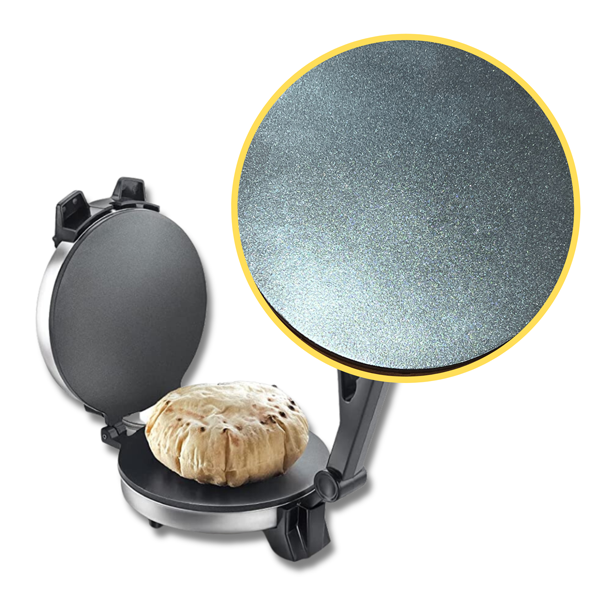
When PTFE coating is used in the right application, production efficiency improves, machine downtime reduces, product quality becomes more consistent, and maintenance cost goes down. That is why PTFE coating is often a smart long-term decision in manufacturing.
At Jai Ambay Etching Process, we provide PTFE non-stick coating services for industrial components based on actual job requirements. We understand that every part behaves differently, so coating performance depends on choosing the right process, thickness, and baking parameters.
Our goal is simple: help manufacturers improve product and process performance with PTFE coating solutions that are practical, durable, and matched to real industrial use.
It is used to reduce sticking, improve release, support easier cleaning, and protect industrial parts from chemicals, moisture, residue, and corrosion.
Industries use PTFE coating for non-stick performance, high temperature resistance, corrosion protection, lower friction, and easier maintenance.
It is used in cookware, food processing, packaging, automotive, chemical, and textile industries on moulds, trays, rollers, guides, and machine parts.
A good PTFE coating service depends on correct preparation, suitable coating thickness, proper baking, strong adhesion, and matching the coating process to the application.
We are proud to support industrial clients from different sectors with specialized surface engineering and PTFE non-stick coating solutions.